Reno·Vision · Private-Client Concept
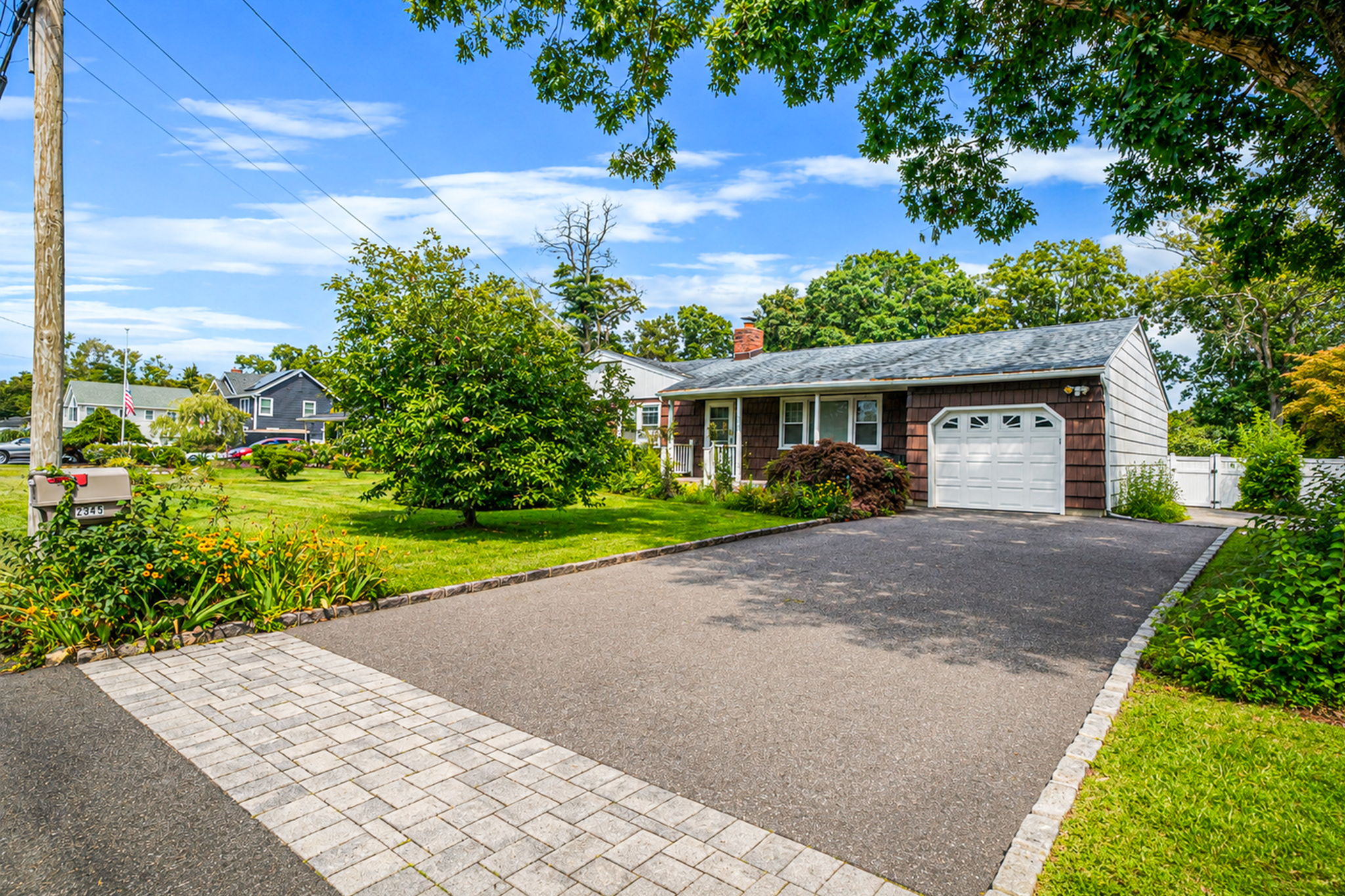
See 2345 Louis Kossuth Avenue renovated.
Ronkonkoma, 11779
An FHA 203(k) renovation loan finances the home and the work in a single mortgage — so a house that needs updating is within reach.
What this could be
Every dated house is two houses.
The one you walk through, and the one it becomes. A renovation loan is what closes the distance — and the pages below show the work and the numbers for this address.
The same house
Before, and after.
The Opportunity
A home with great bones, ready for a thoughtful renovation — and a way to finance the vision and the work in a single mortgage.
A well-maintained but entirely original 1960s/70s ranch on a nice flat, wooded 0.45-acre lot; the shell, mechanicals-adjacent finishes and layout are sound but every surface is original and ready for a full cosmetic-to-moderate gut renovation. Kitchen and baths are the strongest opportunities to drive value, with cosmetic refresh (paint, flooring, ceiling replacement) available throughout the main living areas.
Why This Loan
The 203(k) advantage.
The renovation is in the mortgage
You are not paying for the kitchen out of pocket. The purchase price and the cost of the work are financed together in one FHA 203(k) mortgage.
One low down payment on the whole project
Your down payment is calculated once, on the combined home-plus-renovation total — not twice, and not on the renovation separately. Your lender sets the exact figure.
No renovation loan, no credit cards
There is no second loan, no HELOC, and no construction financing to line up. One application, one closing, one monthly bill.
The work happens after you close
You close first, then the renovation is funded from an escrow the lender manages alongside your licensed contractor.
Most buyers scroll past a house like this because they picture writing a check for the kitchen on top of the down payment. A 203(k) is the reason they don’t have to.
Before & After
See it reimagined.
kitchen
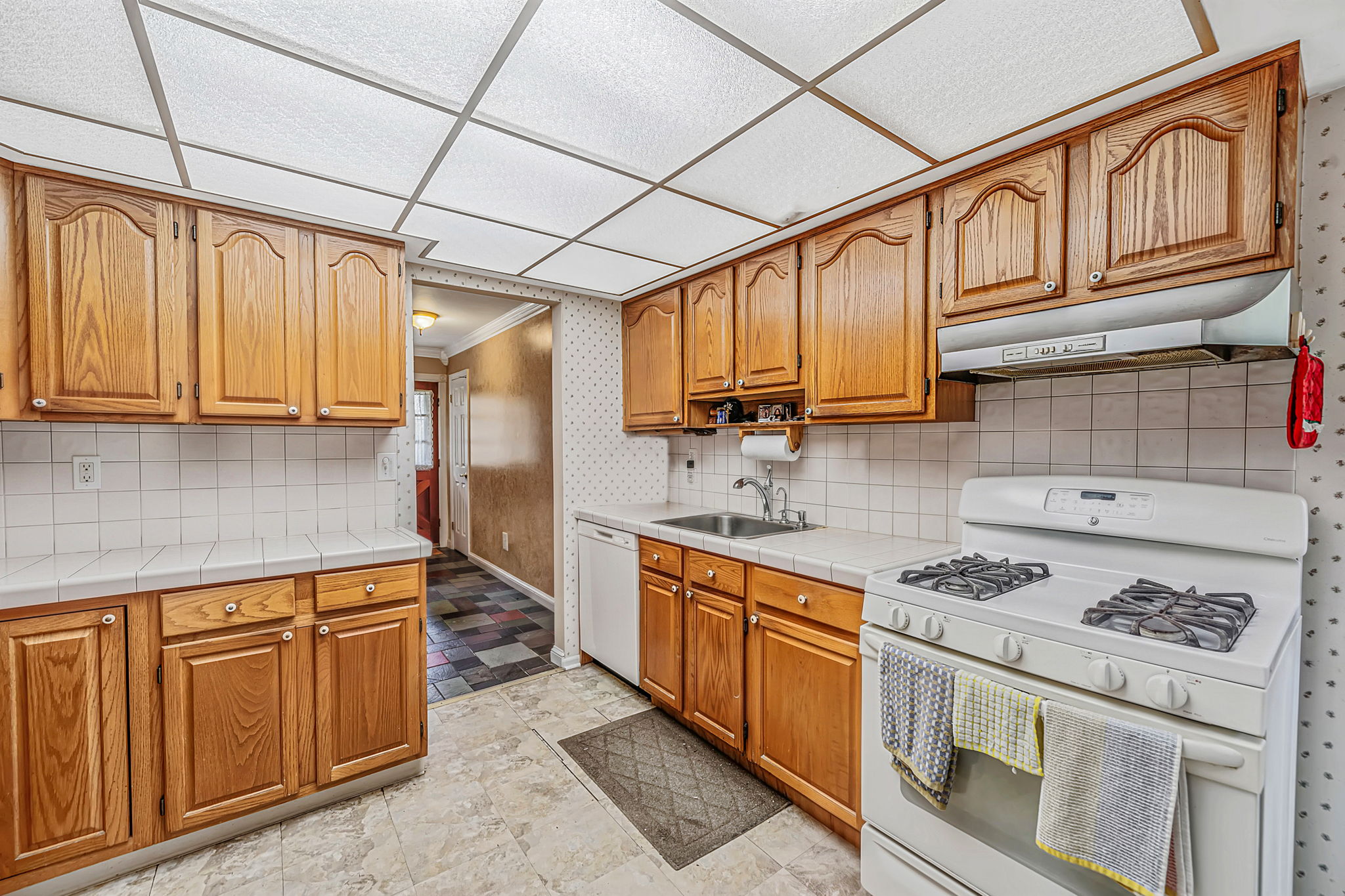 Today
Today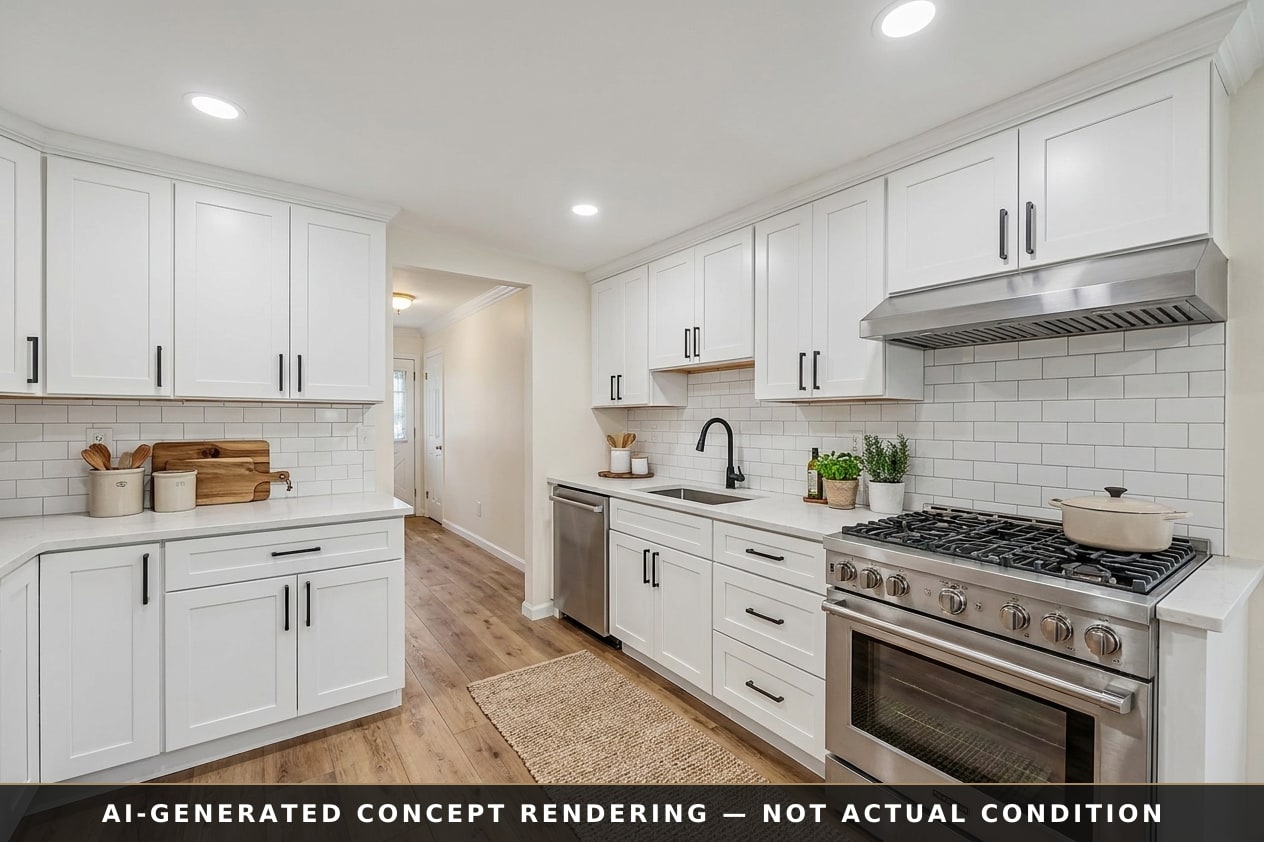 Concept
kitchen dining nook
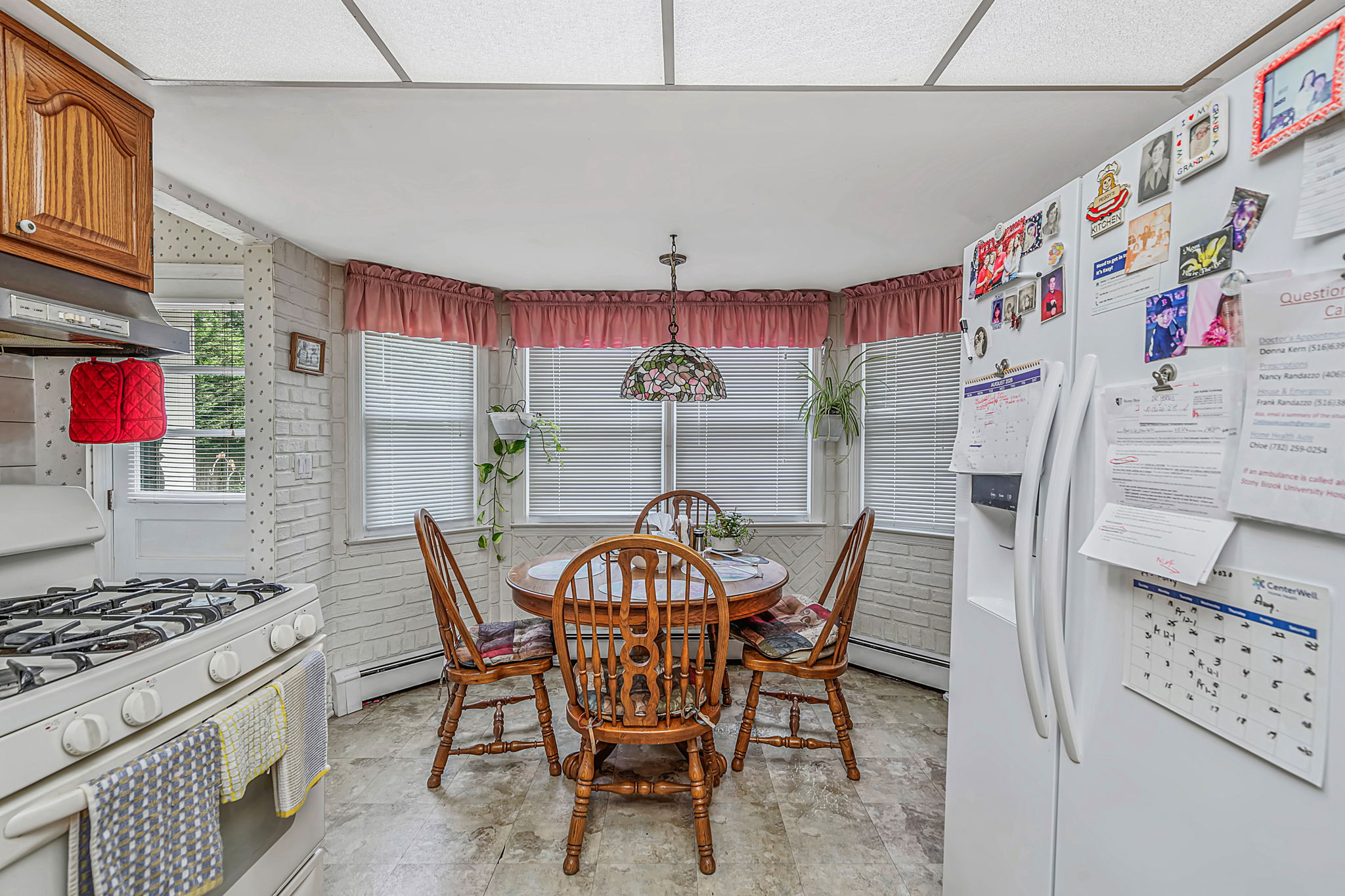 Today
Today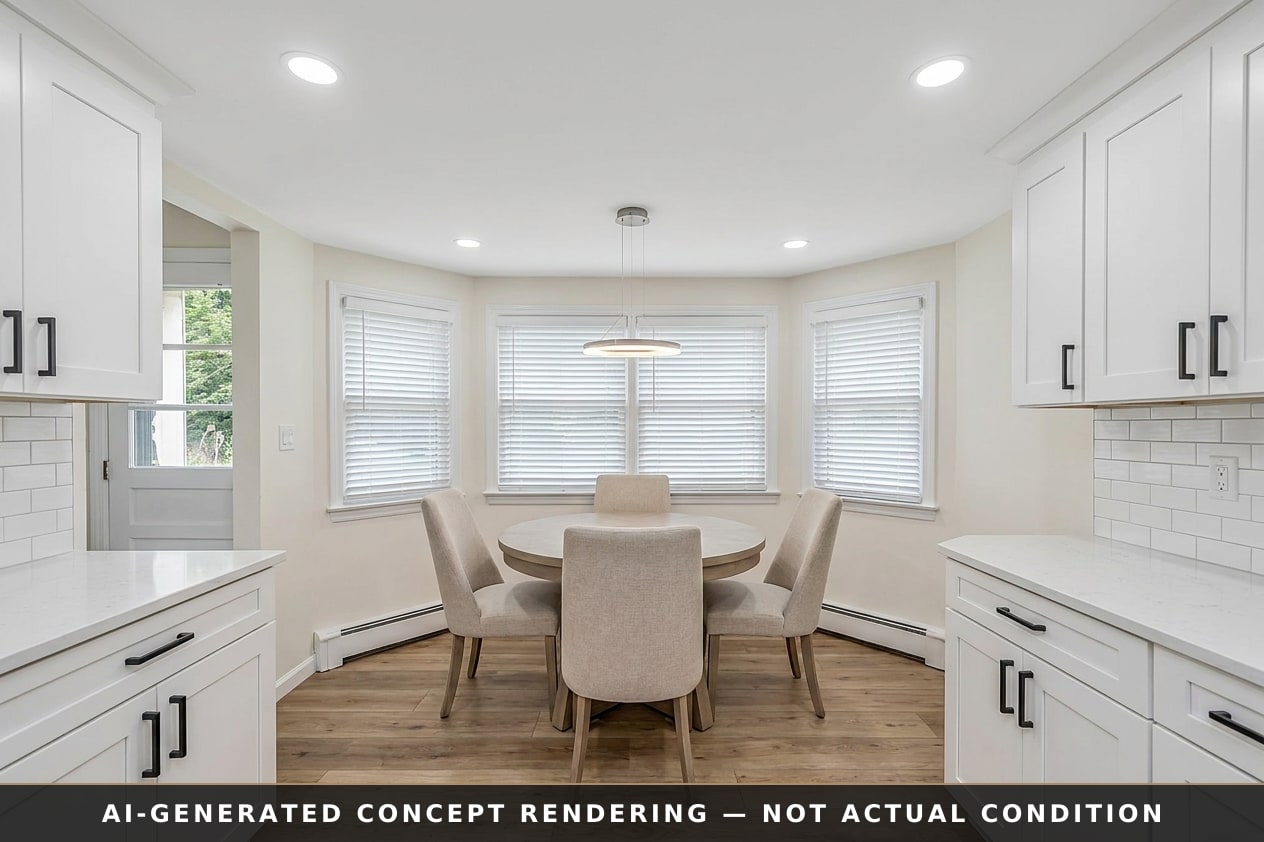 Concept
living room
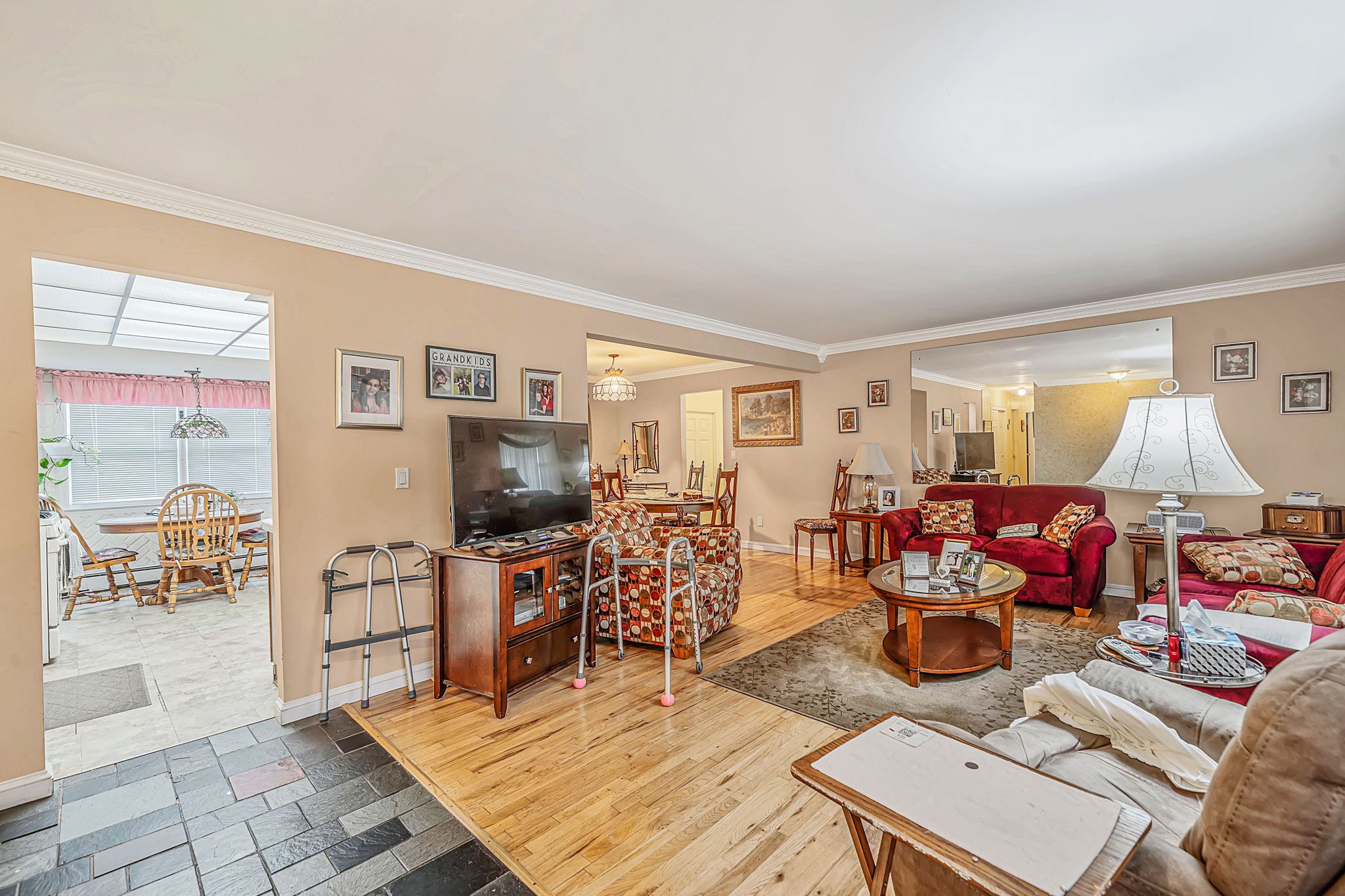 Today
Today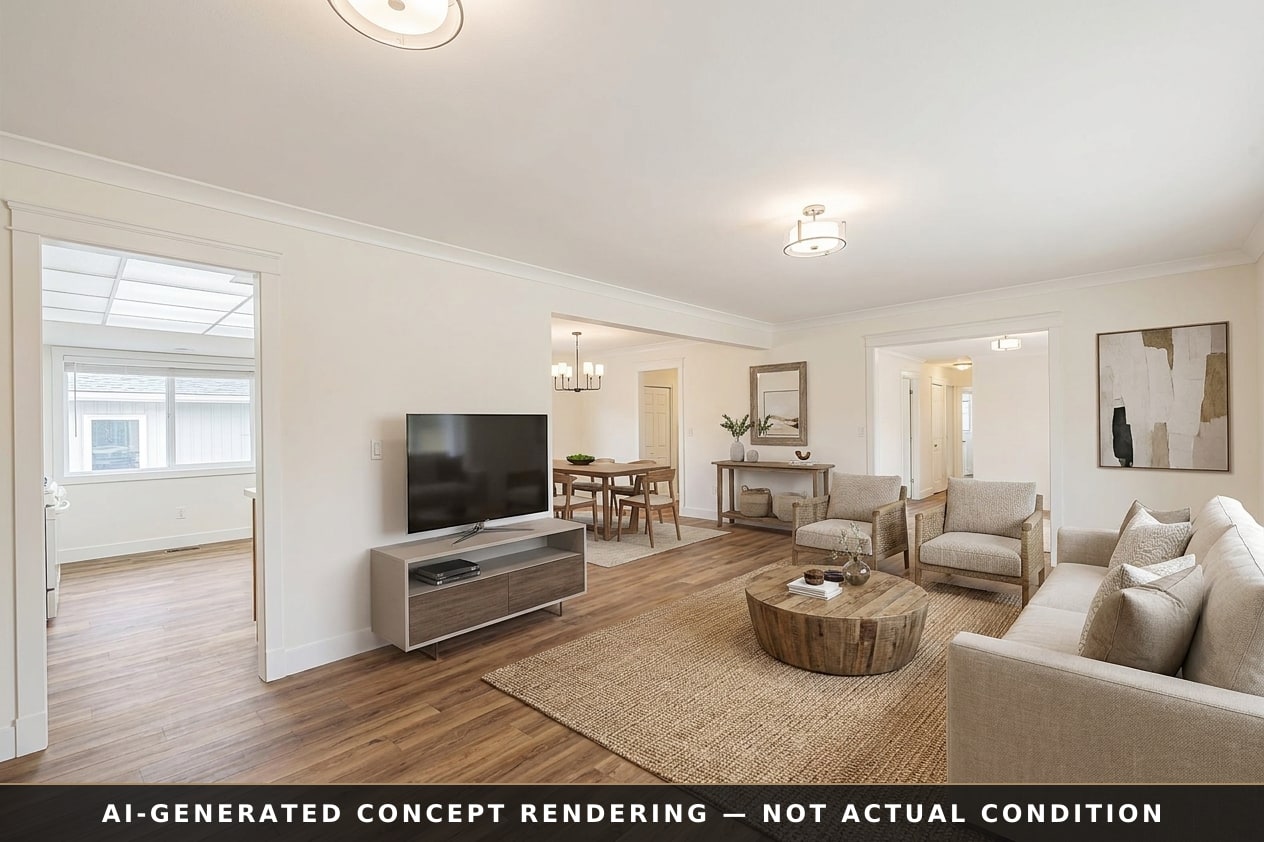 Concept
dining room
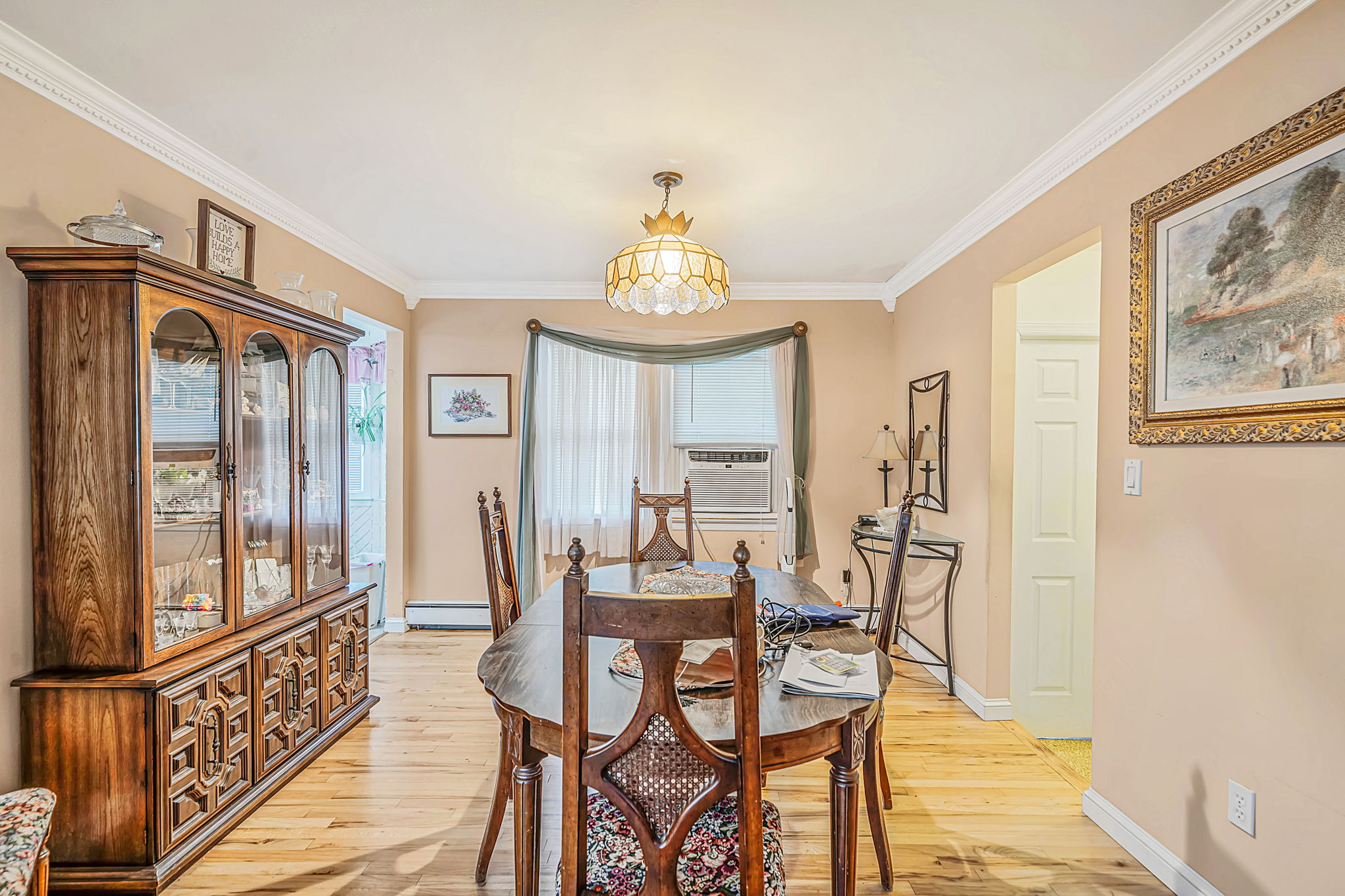 Today
Today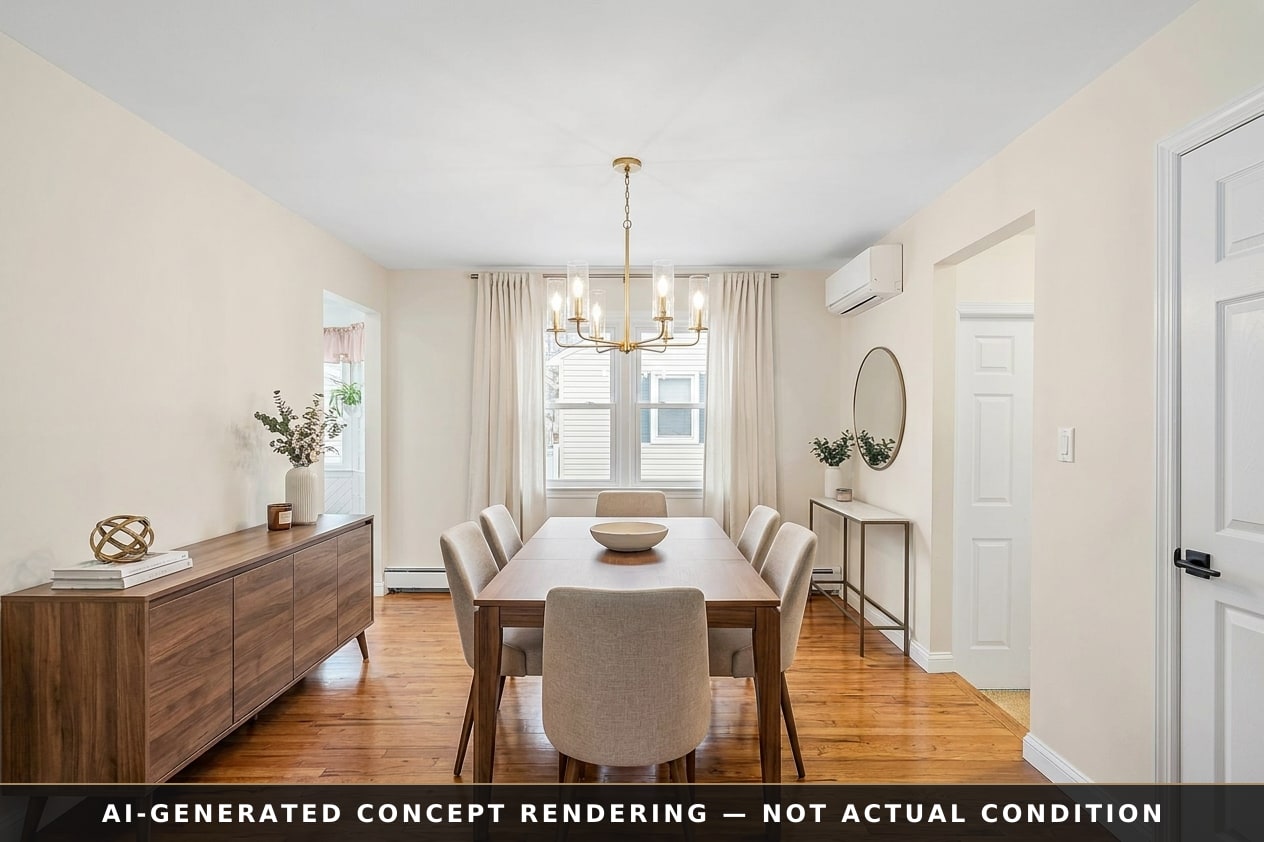 Concept
hall bath
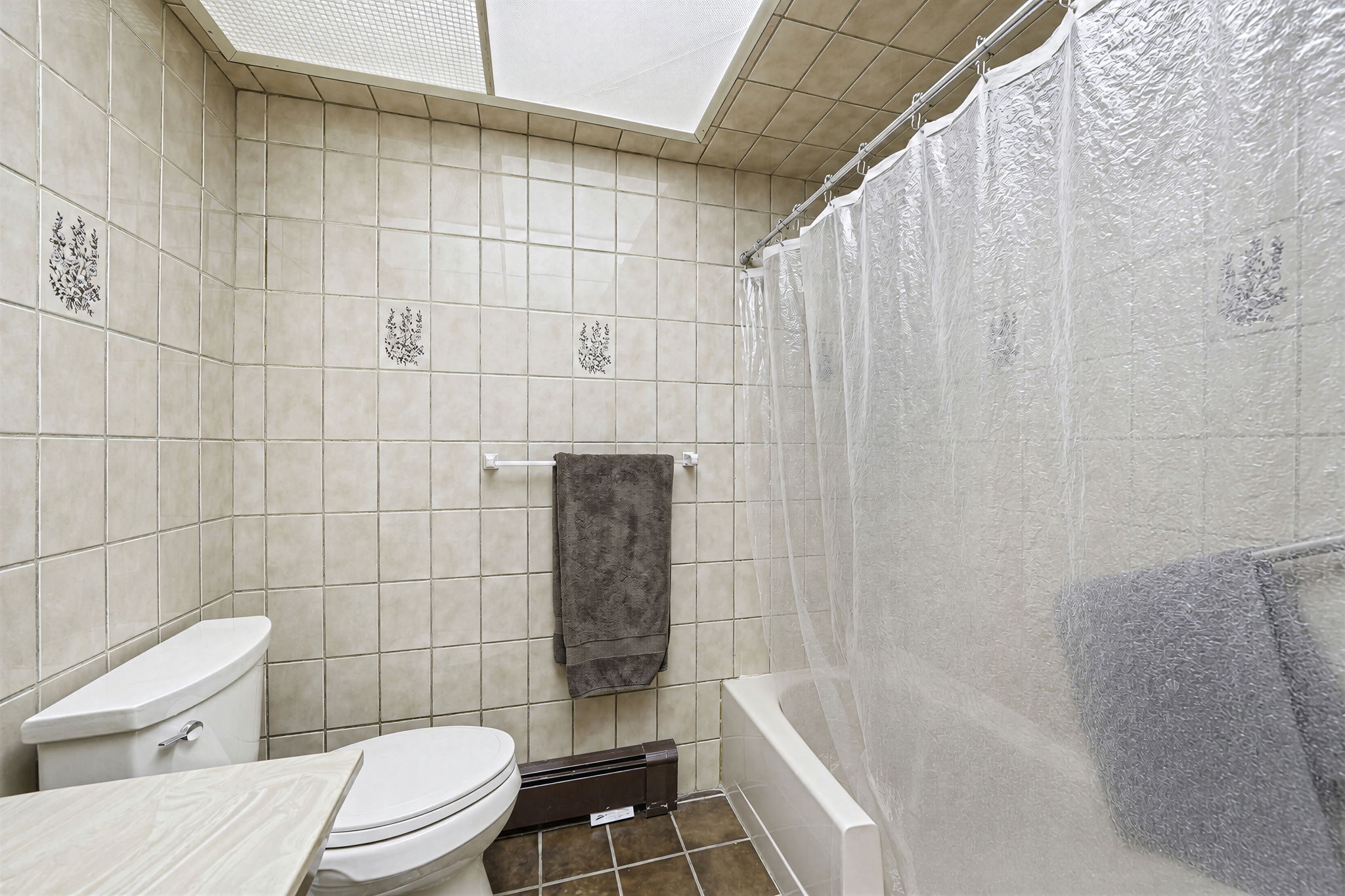 Today
Today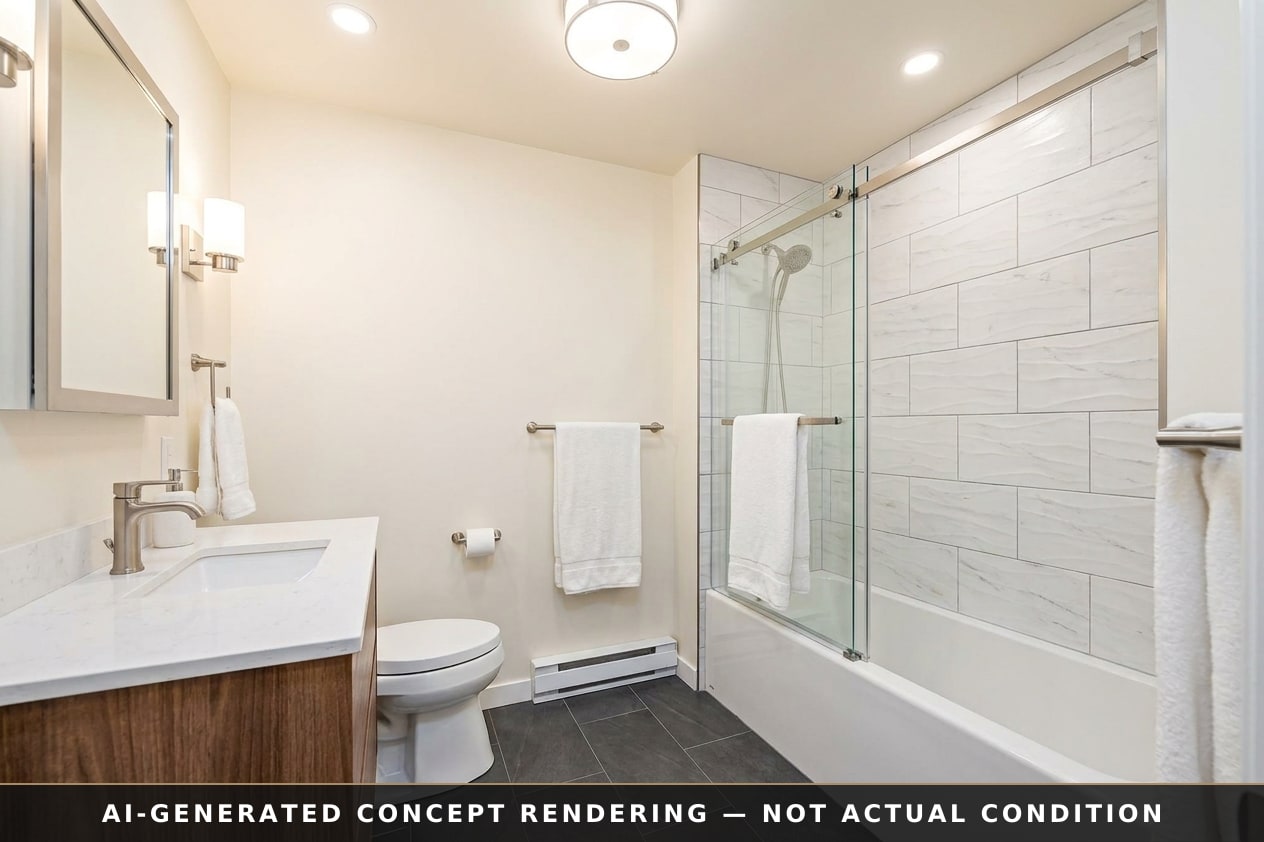 Concept
finished basement
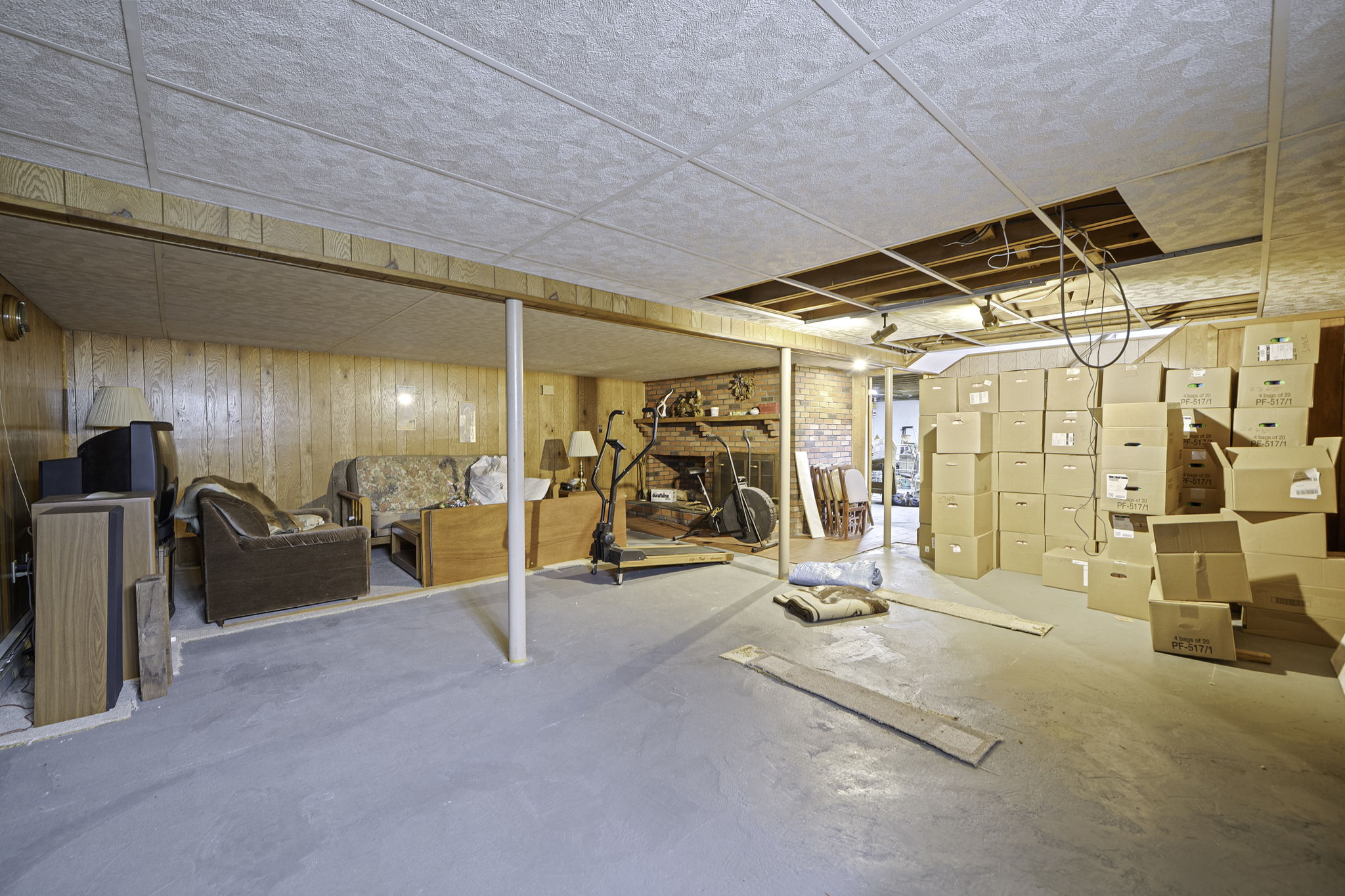 Today
Today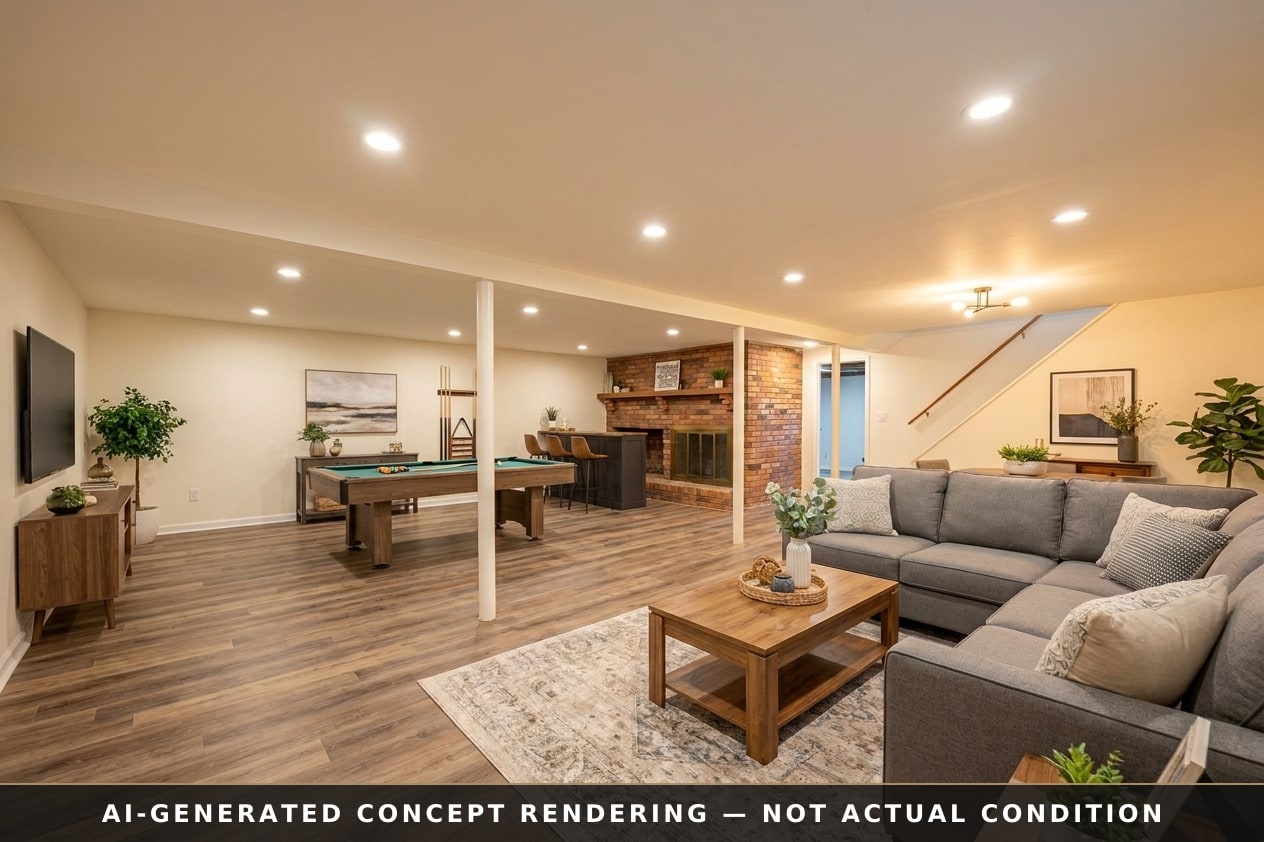 Concept
Drag the handle to compare. The “concept” side is an AI-generated rendering — not a photograph of the actual finished condition — shown beside the real listing photo it was built from. Furnishings shown are virtual staging.
The Numbers
A renovation budget.
Renovation Budget
The scope, in ranges.
| ScopeScope item | RangeEstimated range |
|---|---|
Minor kitchen remodel (reface/refresh) | $20,000 – $35,000 |
Bathroom refresh (fixtures/tile/vanity) | $12,000 – $25,000 |
Hardwood refinish $5–$8 / sqft × 0 sqft × 0.85 | $0 |
Whole-house interior paint | $4,000 – $12,000 |
| Construction subtotal | $36,000 – $72,000 |
Contingency reserve 10% of construction cost | $3,600 – $7,200 |
| Estimated all-in | $39,600 – $79,200 |
Preliminary photo-based estimate for planning purposes only — not a contractor bid and not a HUD 203(k) work write-up. Actual costs require licensed-contractor bids.
This slider covers the work items themselves. The estimated all-in range shown above is higher because it also carries the 10% contingency, permits, and program fees on top of the work.
What that covers
- Minor kitchen remodel (reface/refresh)$20,000 – $35,000
What waits
- Bathroom refresh (fixtures/tile/vanity)$12,000 – $25,000
- Whole-house interior paint$4,000 – $12,000
Estimated cost of the checked work: $20,000 – $35,000 before the 10% contingency the program requires on top of the work itself.
A planning tool, not a quote. Items are shown in the order they would typically be tackled on this house, and each is covered once the budget reaches its running total — real projects get sequenced with your contractor, and a bid can come in above or below any estimate here. These are preliminary estimates for discussion, not contractor bids, appraisals, or property valuations.
Own It Renovated
One loan. Home and renovation.
Renovation Financing
One loan. Home + renovation.
FHA 203(k) renovation financing lets a buyer purchase a home and fund the renovation in a single mortgage — the concept shown on this page is designed around that path. Program terms, rates, and payments come from the licensed lender of your choice. We’re happy to connect you with lenders experienced in renovation lending.
We are a real estate brokerage, not a mortgage lender. Financing is available through any qualified lender. Equal Housing Opportunity.
Cash To Close
It starts with the down payment.
Minimum down payment (3.5%)
$23,079
The FHA minimum down payment is 3.5% — and on a 203(k) it is calculated on the TOTAL acquisition plus renovation cost, not the purchase price alone. This figure is the down payment only, not a total cash-to-close: closing costs, prepaid expenses, the appraisal, earnest money and any inspections are additional out-of-pocket items.
- Total project (purchase + renovation)
- $659,400
- Minimum down payment (3.5%)
- $23,079
- Estimated loan amount (upfront MIP financed in)
- $647,457
- Estimated amount financed (loan less the financed upfront MIP)
- $636,321
- Appraisal
- Paid up front by the buyer
- Closing costs & prepaid expenses
- Additional — not shown here
The down payment must come from the borrower’s own funds or an acceptable gift. A seller or other interested-party concession may NOT be applied to the down payment.
Interested-party contributions are capped at 6% of the sales price and may go toward closing costs, prepaid expenses, discount points, and the upfront mortgage insurance premium. So if a seller agrees to contribute, those costs can be covered or financed rather than paid in cash — which can leave the down payment and the appraisal as the buyer’s out-of-pocket. A concession is negotiated, never guaranteed, and the 6% cap may not cover all of a buyer’s closing costs and prepaid expenses; anything not contributed is paid by the buyer.
The upfront mortgage insurance premium is financed into the loan and annual mortgage insurance is charged monthly. The estimated loan amount sits under the 2026 FHA Suffolk County one-unit limit of $1,249,125 — confirm current limits.
Required Disclosure
7.12% – 7.61% APR
Illustrative annual percentage rate · Sample assumptions, not a rate quote
- Amount of downpayment:
- $23,079 (3.5% of $659,400).
- Terms of repayment:
- 30-year fixed rate; 360 consecutive monthly payments of principal and interest, plus monthly FHA mortgage insurance, on an estimated amount financed of $636,321; the upfront mortgage insurance premium is financed into the loan.
- Annual percentage rate:
- 7.12% – 7.61%, derived from a sample 6.25% – 6.75% note rate band.
This is not a loan offer, quote, pre-approval, or commitment to lend. The rates and APRs shown are hypothetical illustrations, not available offers. Actual terms depend on the borrower’s credit, the lender, the loan program, and market conditions at the time. A licensed loan originator must provide any actual figures. Figures assume an FHA 203(k) purchase-plus-renovation loan at the FHA minimum 3.5% down with the upfront mortgage insurance premium financed and annual mortgage insurance included; closing costs, prepaid expenses, and property taxes are excluded.
The Mechanism
How a 203(k) works.
One loan, one closing
The purchase price and the renovation are financed together in a single FHA 203(k) mortgage — no second loan and no separate construction financing.
One low down payment on the whole project
Your down payment is calculated once, on the combined home-plus-renovation total — not twice, and not on the renovation separately. Your lender sets the exact figure.
Renovate after you close
The work happens after closing, funded from an escrow the lender manages alongside your licensed contractor.
The Real Question
Renovate now, or later?
Renovate with the purchase
One 203(k) mortgage
Buy now, renovate later
Pay for it separately
The renovation money
Financed as part of the same mortgage as the purchase. The estimated $39,600 – $79,200 is built into the loan rather than paid from savings.
Paid out of pocket, or financed separately later. You need $39,600 – $79,200 in cash, a second loan, or a credit line when the time comes.
When work starts
Shortly after closing. The contractor is lined up and the scope is priced before you own the house, so the project begins on a schedule you already know.
Whenever the money is there. In practice that is usually later than planned, and the scope tends to shrink to fit what has been saved.
What you live in
A finished house, close to move-in. You live through one renovation, on a defined timeline, at the start.
The house exactly as it is today — for as long as it takes. Every year of waiting is a year in the unrenovated version.
Pricing the work
Bid before closing, by a contractor working from a written scope. You know the number before you are committed.
Bid whenever you get to it, at whatever labor and material prices exist then. Renovation costs are not fixed in place while you save.
The paperwork
Heavier. More documents, a contractor bid, an as-completed appraisal, and inspections tied to payment stages.
Lighter at purchase — a normal closing — with the work, and its financing, still ahead of you.
The renovation money
With the purchase
Financed as part of the same mortgage as the purchase. The estimated $39,600 – $79,200 is built into the loan rather than paid from savings.
Later, separately
Paid out of pocket, or financed separately later. You need $39,600 – $79,200 in cash, a second loan, or a credit line when the time comes.
When work starts
With the purchase
Shortly after closing. The contractor is lined up and the scope is priced before you own the house, so the project begins on a schedule you already know.
Later, separately
Whenever the money is there. In practice that is usually later than planned, and the scope tends to shrink to fit what has been saved.
What you live in
With the purchase
A finished house, close to move-in. You live through one renovation, on a defined timeline, at the start.
Later, separately
The house exactly as it is today — for as long as it takes. Every year of waiting is a year in the unrenovated version.
Pricing the work
With the purchase
Bid before closing, by a contractor working from a written scope. You know the number before you are committed.
Later, separately
Bid whenever you get to it, at whatever labor and material prices exist then. Renovation costs are not fixed in place while you save.
The paperwork
With the purchase
Heavier. More documents, a contractor bid, an as-completed appraisal, and inspections tied to payment stages.
Later, separately
Lighter at purchase — a normal closing — with the work, and its financing, still ahead of you.
A general comparison of two approaches, for education only — not advice about which is right for you, and not an offer of credit or a statement of loan terms. Which path makes sense depends on your finances, the property, and the scope of work. Loan terms, costs, and eligibility come from your lender.
What Happens
Offer to keys.
Week 0
Offer accepted
You go under contract like any other purchase. Nothing about the 203(k) changes how the offer itself works — inspection, attorney review, and the rest run exactly as they normally do on Long Island.
Weeks 1–2
Contractor walks the house
Your contractor visits and writes a detailed, line-item bid. This is the step buyers underestimate: the bid has to be specific, because the lender is lending against it. Lining up a contractor early is the single biggest thing you control.
Weeks 2–4
Appraisal — valued as finished
The appraiser is given the renovation plans and appraises what the house will be WORTH ONCE THE WORK IS DONE, not what it is worth the day you walk through it. That after-improved value is the mechanism that makes the whole loan work.
Weeks 4–7
Underwriting and clear to close
The lender reviews the bid, the write-up, the appraisal, and your file together. Expect more back-and-forth than a standard purchase — there are simply more documents in play. Answering document requests the same day is what keeps this window short.
Closing day
You own it; the renovation money is set aside
The purchase funds and the renovation funds close together in one mortgage. The renovation portion goes into an escrow account held by the lender — it is not handed to you or to the contractor up front.
Days after closing
Work begins
Contractors generally have to start within roughly a month of closing and keep moving. The exact requirement is your lender's to state, so confirm it with them before you sign.
Through the project
Draws — the contractor gets paid in stages
Work is inspected and paid in installments as it is completed, never all at once. That structure is a protection for you: nobody is paid for a phase that has not been finished and signed off.
Project close-out
Final inspection, and it's done
The last inspection releases the final draw. Any renovation money left unspent is applied to your loan balance rather than refunded as cash.
Timeframes above are typical ranges for planning purposes, not commitments. Every file moves at its own pace depending on the scope of work, the contractor’s availability, the appraisal, and how quickly documents come back. Your lender sets the actual requirements and deadlines for your loan.
Two Minutes
Is this the right loan for you?
Question 1 of 6
Will you live in this home as your primary residence?
The 203(k) is an owner-occupant program — this is the question that decides everything else.
This is a general education tool about PROPERTY and PROJECT eligibility. It is not a pre-qualification, a pre-approval, a loan application, or a credit decision, and it asks nothing about your income, assets, or credit. Only a licensed lender can determine whether you and a property qualify. Program rules and dollar limits are set by FHA and change over time — confirm current requirements with your lender.
Straight Answers
203(k) questions, answered.
Isn't a renovation loan complicated?
Less than most people expect. An FHA 203(k) is one loan with one closing: the purchase and the renovation budget are financed together, and the renovation funds are held in escrow and released to the contractor as work is completed. A 203(k)-experienced lender manages the draw process — your job is choosing the house and the finishes.
Who does the renovation work?
Licensed contractors that you select and the lender accepts. The work is defined in a written scope before closing, so the price and plan are set up front. This is not a do-it-yourself program — which is a feature: the budget is real bids from real contractors, not guesses.
What if contractor bids come in higher than the estimate on this page?
The figures on this page are preliminary planning estimates, not bids. The actual loan is sized from your accepted contractor bids, and the program builds in a contingency reserve on top of them specifically to absorb surprises. Nothing about this concept commits you to a number.
Can the down payment be rolled into the loan?
No — the renovation costs are financed, but a down payment is still required and cannot be financed into the loan. Depending on the deal you negotiate, a seller may agree to cover some closing costs as a concession, which can reduce what you bring to the table — but concessions are negotiated, never guaranteed, and they cannot fund the down payment.
How long does it all take?
Closing on a 203(k) typically takes somewhat longer than a standard purchase because the renovation scope is documented up front. After closing, the home is yours and the renovation runs on the timeline in your contractor agreement, with funds released as stages complete. Every project is different — bring us the address and we'll walk you through a realistic schedule.
Different question? Ask us directly below — no obligation, and no such thing as a dumb 203(k) question.
Next Step
Start the conversation.
Want to see what it takes to own 2345 Louis Kossuth Avenue renovated? Share your details and our team will walk you through the concept — no obligation.
Faster on your phone?
📱 Text me about this houseOpens a text to (631) 986-0222— we’ll reply with the details. Msg & data rates may apply. Reply STOP to opt out.